Generative AI / Content workflow
AI Blog Writing Agent
A LangGraph-based multi-step content generation system that routes topics, researches when needed, and produces structured Markdown.
- Python
- Streamlit
- LangGraph
- Google Gemini 2.5 Flash
- LangChain
- Tavily
- Pydantic
- Pandas
- Markdown
Problem
Blog generation needs different levels of research depending on the topic, followed by planning and consistent section-level writing.
Approach
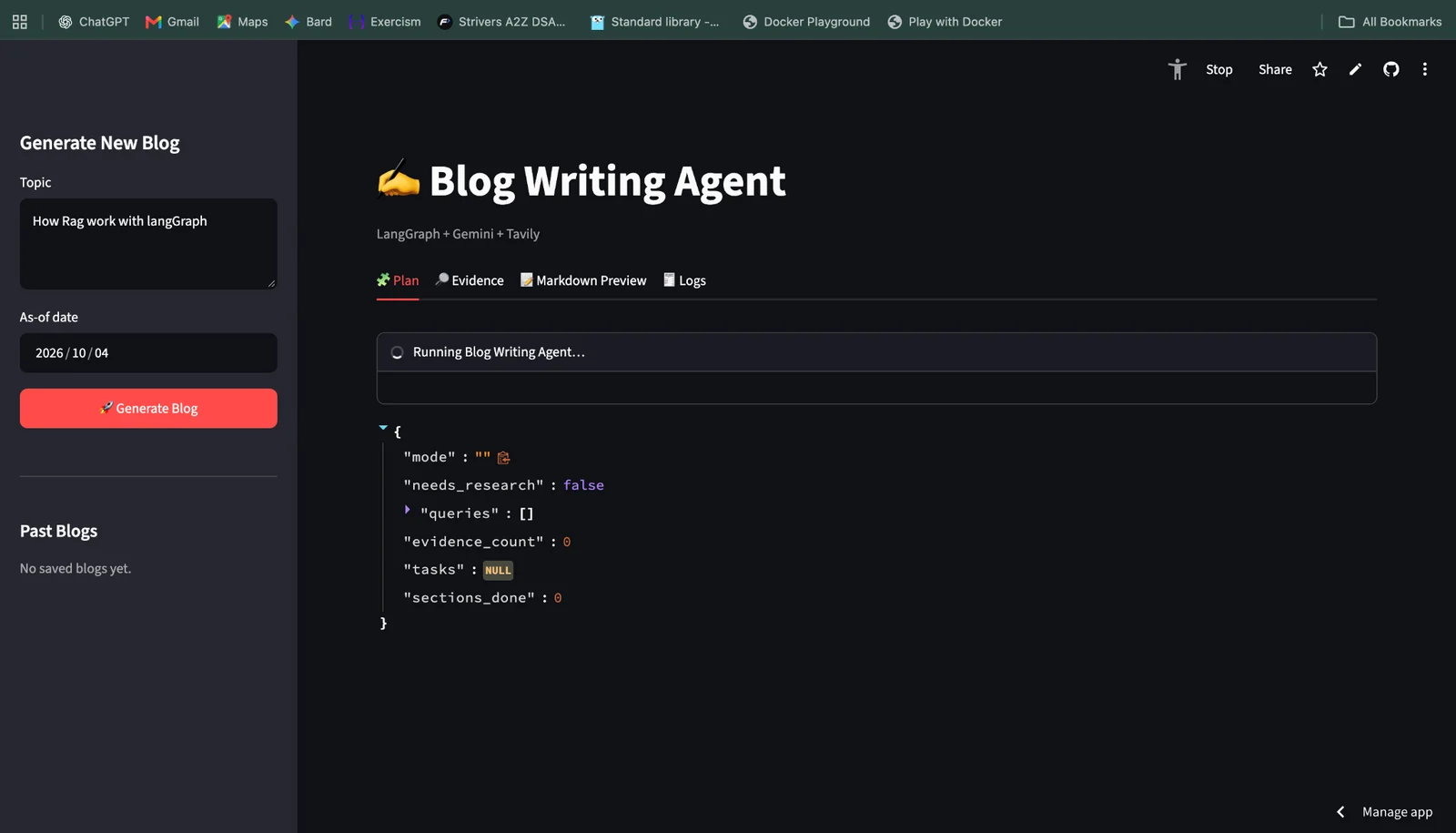
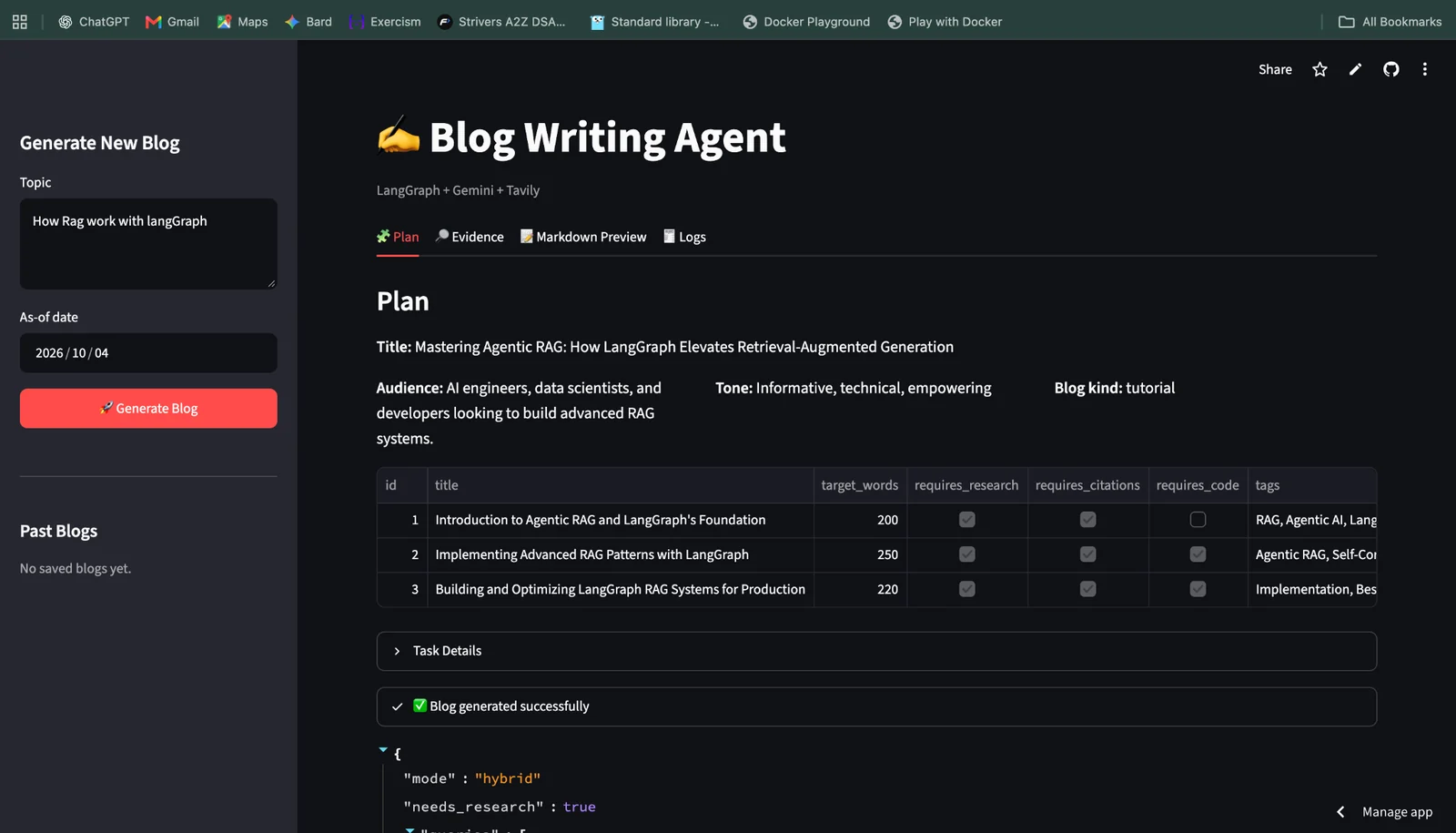
The workflow routes a topic into closed-book, hybrid, or open-book generation, gathers structured evidence when research is required, plans the article, runs parallel section workers, and reduces their output into final Markdown.
Architecture
Capabilities
- Intelligent topic routing
- Closed-book mode
- Hybrid mode
- Open-book mode
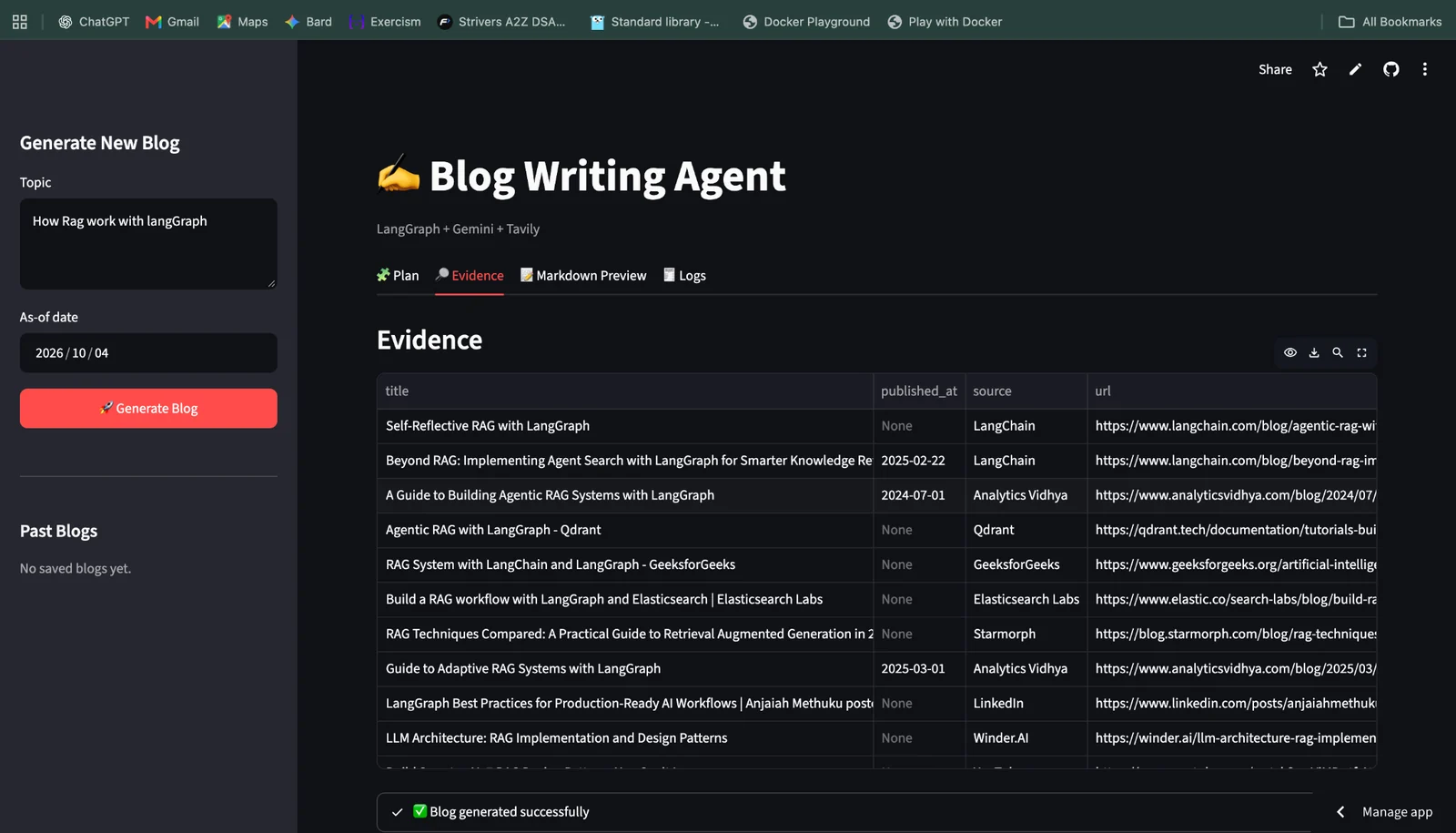
- Adaptive web research
- Structured evidence
- Planning
- Parallel section generation
- Reducer / merge stage
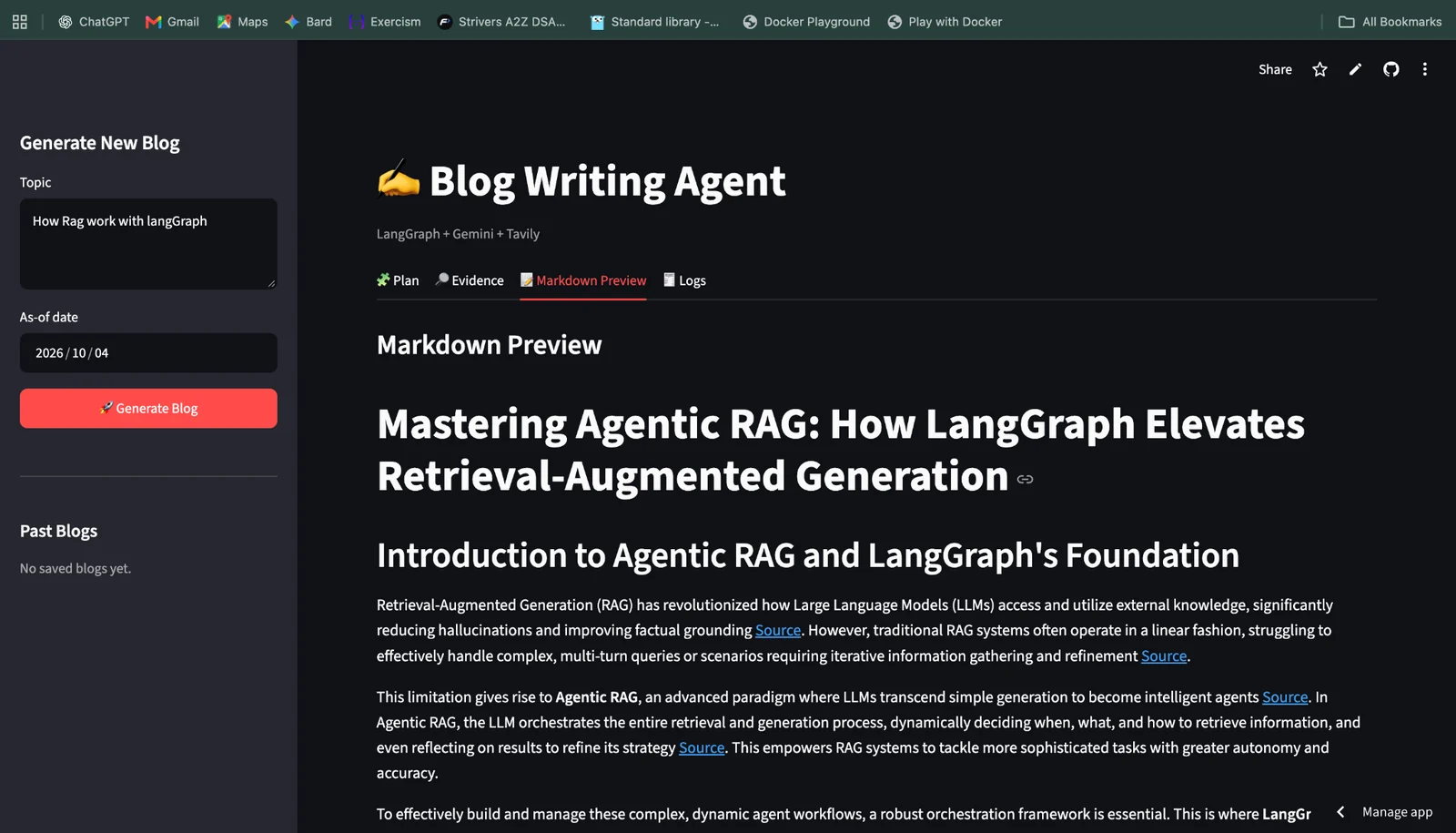
- Markdown output
Problem
A useful writing workflow must decide when research is necessary and keep research, planning, and section generation coordinated.
Solution
The agent combines routing, optional Tavily research, structured evidence, planning, parallel workers, and a reducer into one LangGraph workflow.
Routing and research
The router selects closed-book, hybrid, or open-book generation. Tavily research is used when the selected workflow requires it.
Evidence and planning
Research results become structured evidence that informs the blog plan before section generation begins.
Fan-out workers and reducer
Section workers generate parts of the article in parallel, then the reducer merges them into final Markdown.
Final output
The Streamlit application produces a structured Markdown blog from the coordinated workflow.
Challenges and learnings
The workflow demonstrates how routing and fan-out / reducer patterns can make multi-step content generation adaptive and composable.